
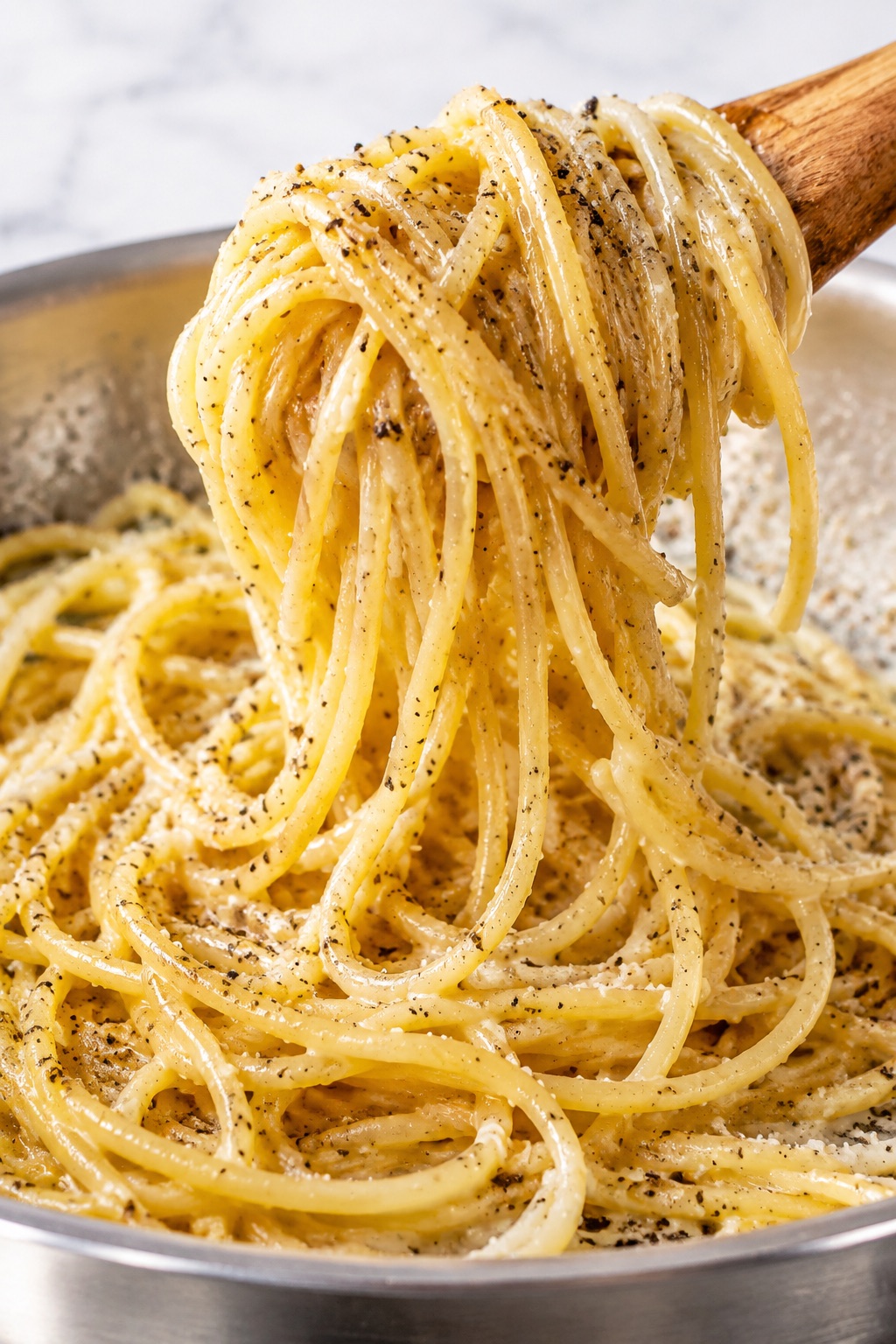
Classic Cacio e Pepe is creamy, peppery and elegantly simple.
The Roman classic of spaghetti with Pecorino Romano, Parmesan and black pepper. Just pasta, cheese and pepper.
Why You’ll Love This Recipe
- Only 3 ingredients
- Creamy
- Roman classic
- Quick
Ingredients for Classic Cacio e Pepe
- 1 lb spaghetti or tonnarelli
- 1 1/2 cups finely grated Pecorino Romano
- 1/2 cup finely grated Parmesan
- 2 tsp freshly cracked black pepper
- 2 tbsp butter (optional)
Equipment You’ll Need
- Large pot for boiling pasta
- Large deep skillet
- Tongs
- Liquid measuring cup to save pasta water
- Sharp knife and cutting board
Ingredient Notes
- Pecorino: Sharp sheep's cheese.
- Black pepper: Freshly cracked.
- Pasta water: Creates sauce.
Recipe at a Glance
- Prep time: 5 minutes
- Cook time: 12 minutes
- Total time: 17 minutes
- Servings: 4
- Method: Stovetop
- Category: Dinner
- Difficulty: Easy
Why This Recipe Works
Starchy water and finely grated cheese emulsify into a creamy sauce.
More About This Recipe
Cacio e pepe is one of Rome's most iconic pasta dishes. Its simplicity hides a technique: emulsifying cheese with starchy pasta water to create a silky sauce without cream. Once you master it, it becomes a go-to dinner.
The Secret to Clump-Free Sauce
Make a cheese paste and add it off the heat.
Full measurements and printable instructions are in the recipe card below.
How to Make Classic Cacio e Pepe
Step 1
Cook pasta in less water; reserve 2 cups.
Step 2
Toast pepper in a skillet.
Step 3
Mix cheeses with a little cool pasta water into a paste.
Step 4
Add pasta and hot water to the skillet, then the cheese paste off heat.
Step 5
Toss until creamy.
Tips for the Best Results
- Grate finely.
- Off heat.
- Toast pepper.
Tips From Our Kitchen
Cook pasta in less water to concentrate starch.
Use a microplane for fluffy cheese.
Variations to Try
- Add lemon.
- Add peas.
- Use bucatini.
What to Serve With It
Serve with salad.
In Rome, cacio e pepe is usually served as a first course, followed by a simple main like roast chicken or grilled vegetables. At home, it makes a satisfying dinner with a fresh green salad dressed with lemon and olive oil, which balances the rich, peppery cheese. A plate of sautéed spinach or roasted broccoli also pairs well. Serve the pasta immediately in warmed bowls, since the sauce is at its creamiest right after tossing and thickens as it cools.
Roman Classic
Cacio e pepe dates back to Roman shepherds.
Nutrition Notes
Cheese provides protein and calcium.
Perfect for Any Occasion
Great for quick dinners.
Make-Ahead and Storage Tips
Finely grated cheese is essential. Best fresh.
Common Mistakes to Avoid
The most common cacio e pepe mistake is clumpy cheese, which happens when the pan is too hot. Always add the cheese paste off the heat and toss constantly. Using pre-grated cheese is another pitfall, as it contains anti-caking agents that prevent melting. Grate your own Pecorino as finely as possible.
Frequently Asked Questions
Clumpy?
Too hot.
Parmesan only?
Yes.
Gluten-free?
GF pasta.
Butter?
Optional.
Pepper?
Fresh.
Final Thoughts
Creamy and peppery, cacio e pepe is Roman simplicity at its best.
PrintClassic Cacio e Pepe
The Roman classic of spaghetti with Pecorino Romano, Parmesan and black pepper.
- Prep Time: 5 minutes
- Cook Time: 12 minutes
- Total Time: 17 minutes
- Yield: 4 servings 1x
- Category: Dinner
- Method: Stovetop
- Cuisine: Italian
Ingredients
- 1 lb spaghetti or tonnarelli
- 1 1/2 cups finely grated Pecorino Romano
- 1/2 cup finely grated Parmesan
- 2 tsp freshly cracked black pepper
- 2 tbsp butter (optional)
Instructions
- Cook pasta in less water; reserve 2 cups.
- Toast pepper in a skillet.
- Mix cheeses with a little cool pasta water into a paste.
- Add pasta and hot water to the skillet, then the cheese paste off heat.
- Toss until creamy.
Notes
Finely grated cheese is essential.